

HISTORY HIGHLIGHT
At the 40th Annual Grammy Awards in 1998, Bob Dylan’s iconic album Time Out of Mind was awarded Album of the Year, marking a significant moment in both the artist’s career and the history of contemporary music. Released in September 1997, Time Out of Mind was Dylan’s first album of original material in eight years, following Good as I Been to You and World Gone Wrong, which had been largely collections of traditional folk songs. The album’s recognition by the Grammys was not only a testament to Dylan’s enduring influence but also a reflection of the way Time Out of Mind bridged classic folk sensibilities with modern production techniques, earning critical acclaim across the board. Its win demonstrated that even decades into a career, an artist could reinvent themselves while staying deeply authentic, a feat few musicians achieve consistently.
Time Out of Mind is often noted for its exploration of themes such as mortality, loss, and existential reflection. Songs like “Love Sick” and “Not Dark Yet” are imbued with a haunting melancholy that reflects both personal introspection and a broader commentary on human fragility. Dylan’s gravelly, aged voice, paired with Daniel Lanois’s atmospheric production, created a sound that was simultaneously timeless and strikingly contemporary. Critics praised the album for its emotional depth and narrative sophistication, highlighting Dylan’s ability to transform intimate feelings into universally resonant music. This thematic richness is part of what set Time Out of Mind apart from other albums of the era, allowing it to capture the attention of Grammy voters who recognized the artistic achievement in both songwriting and sonic innovation.
The production of Time Out of Mind also deserves special attention, as it represented a departure from Dylan’s earlier, more stripped-down recordings. Producer Daniel Lanois, known for his work with U2 and Peter Gabriel, brought a layered, textured approach that emphasized atmosphere over immediate accessibility. The album’s soundscapes, often drenched in reverb and subtle electronic elements, created a haunting, almost cinematic quality that perfectly complemented Dylan’s lyrical narratives. This innovative production style contributed to the album’s critical acclaim and arguably helped it resonate with a wider audience, including listeners who may not have been long-time Dylan fans. The collaboration between Dylan and Lanois is widely regarded as one of the most fruitful partnerships in modern music, demonstrating how production can elevate even a legendary artist’s work to new heights.
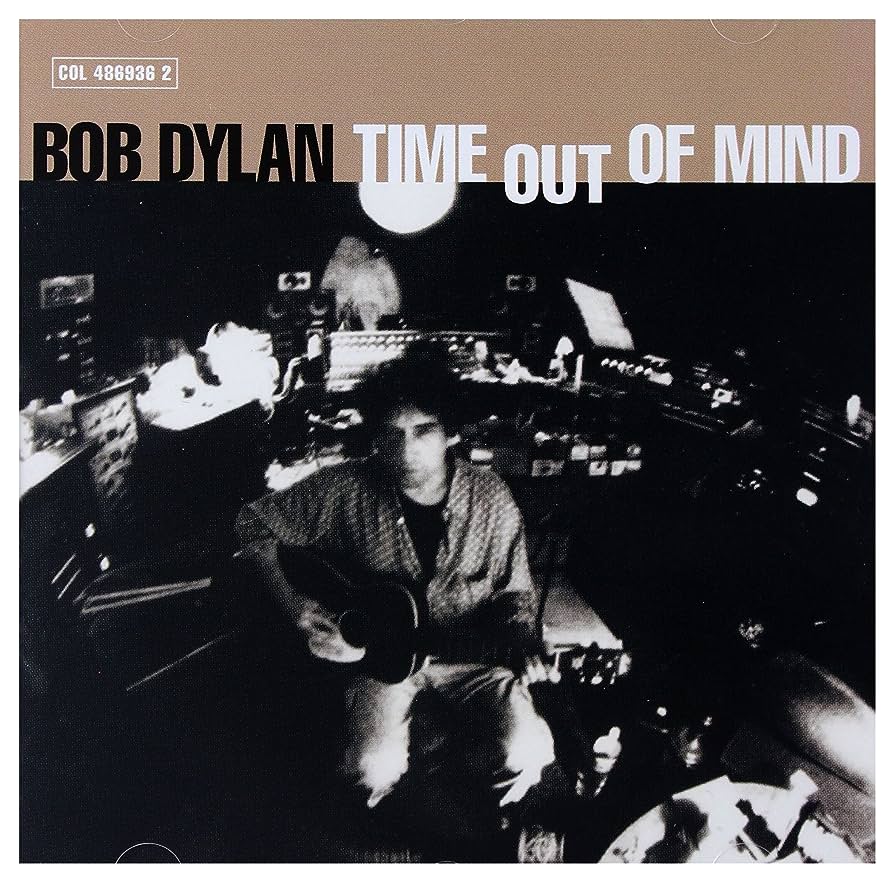
The impact of Time Out of Mind extended far beyond its Grammy recognition. The album revitalized Dylan’s career at a time when many observers wondered whether his creative prime had passed. Following the release, Dylan embarked on tours that drew enthusiastic audiences eager to hear both his new work and classic hits. The album also sparked renewed interest in Dylan’s earlier catalog, prompting critics and fans to reassess the trajectory of his career and the evolution of his songwriting. By blending introspection with experimentation, Time Out of Mind proved that a seasoned artist could remain culturally relevant while continuing to push creative boundaries.
In addition to commercial and critical success, Time Out of Mind influenced a generation of songwriters and musicians. Many contemporary artists have cited Dylan’s late-90s resurgence as inspiration for their own explorations of mature themes, emotional vulnerability, and sonic experimentation. The album’s introspective nature and willingness to confront mortality head-on opened a path for other veteran artists to create deeply personal work without compromising artistic integrity. In this sense, Time Out of Mind is more than just a singular achievement—it represents a turning point in popular music, showing that innovation and authenticity are not limited by age or era.
Ultimately, the recognition of Time Out of Mind as Album of the Year at the 1998 Grammys solidified Bob Dylan’s legacy as one of the most influential and enduring figures in music history. The album encapsulates the unique ability of Dylan to combine poetic lyricism with experimental soundscapes, producing work that is both deeply personal and universally resonant. Its success demonstrated that artistic evolution, even after decades in the spotlight, can lead to work that resonates across generations. As fans and critics continue to revisit Time Out of Mind, it remains a testament to the enduring power of Dylan’s vision, proving that great artistry is timeless and that reinvention is not only possible but often essential to sustaining creative brilliance.